September 2026 – Strategic priorities update
Inspiring curiosity across the UK
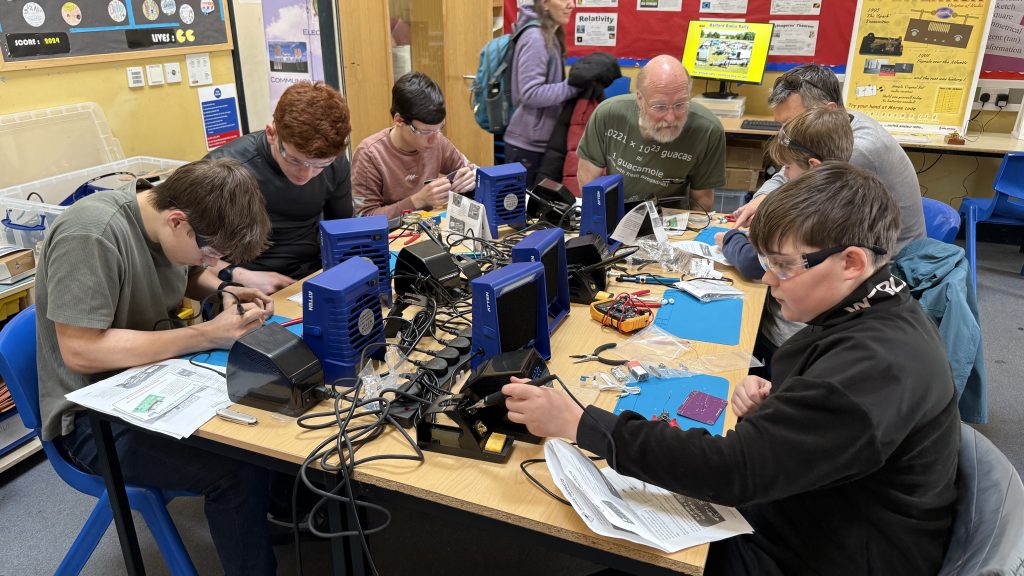
In this update I’m sharing how long-term strategy, legacy funding and in-person engagement shaped the RSGB’s British Science Week 2026 impact.
British Science Week (BSW) 2026 took place in March, and the RSGB Outreach and Youth Teams are now reflecting on the significant progress made through years of steady, strategic work to introduce amateur radio to young people through STEM-based activities and meaningful in-person engagement. With the national theme set as “curiosity”, this year’s achievements represent not a sudden new idea, but the latest step in a multi-year commitment by the Society to engage with youth organisations and community groups across the UK, both remotely and face to face.
The RSGB’s involvement in BSW has grown over many years, initially driven by dedicated volunteers within the Society and supportive RSGB HQ staff. This early foundation was strengthened through the contributions of John Hislop, G7OHO and more recently expanded with the dedicated efforts of RSGB BSW Coordinator Professor Ian Neal, G7IGN. Ian played a central role in supporting the groups who took part last year and in helping them develop their activities further for 2026, encouraging both hands-on kit building and in-person amateur radio demonstrations. His work, including a one-page feature in the March RadCom, highlights organisations which have embraced amateur radio as part of their STEM offer and shows how direct engagement can spark long-term interest.
Building on last year’s foundations
Although this year’s initiative generated extraordinary interest, it is important to recognise that it built directly on the foundations laid in 2025. Last year, the RSGB distributed a smaller number of FM radio receiver kits, funded by the RSGB Legacy Fund and the Radio Communications Foundation (RCF). Surprisingly, those kits were initially difficult to give away. However, the extensive communications work that followed, showcasing what young people achieved, how organisations used the kits and how volunteers supported them in person, proved pivotal.
Those stories inspired confidence, encouraged wider participation and created the momentum that made this year’s expanded offer possible.
In 2026, the initiative grew not only in scale but also in scope, with the addition of Morse practice kits to broaden the learning experience. This evolution reflects the Society’s long-term strategy: to provide accessible, hands-on pathways into amateur radio that spark curiosity, support STEM learning, and encourage real-world interaction between young people and the amateur radio community.
Funding that enabled strategic growth
To deliver this expanded programme, the Outreach and Youth Team once again applied for support from the RSGB Legacy Fund and the RCF. Both organisations responded enthusiastically and awarded £2,000, which gave us a combined initial total of £4,000 dedicated to supplying kits to youth groups.
When the application form went live on 16 December 2025, the response was immediate and unprecedented. Within 24 hours, 245 applications had been received from STEM clubs, Cadet groups, Scouts, schools, universities, home education networks and after-school programmes. The demand was so strong that the offer had to close the next day.
Recognising the scale of interest and the strategic opportunity it represented, the team sought additional funding. Once again, both the Legacy Fund and the RCF stepped forward, each approving a further £2,000. This doubled the total support to £8,000, enabling the Society to reach many more young people than originally planned and to support more opportunities for in-person demonstrations, club visits and community engagement during and after British Science Week.
A strategy rooted in long-term development
The success of this year’s initiative is not simply the result of a popular offer. It is the outcome of:
-
Years of RSGB commitment to British Science Week, supported from the outset by both volunteers and RSGB HQ staff
-
Consistent volunteer leadership, including the work of Prof. Ian Neal, G7IGN
-
Legacy and RCF funding used strategically over multiple years
-
Evidence-based growth, informed by last year’s experiences and feedback
-
A deliberate effort to build confidence and visibility through communications
-
Increasing emphasis on in-person engagement, club involvement, and community-based activity
This long-term approach is already showing encouraging signs. For example, Altrincham Grammar School for Girls, one of last year’s kit recipients, has since established a new amateur radio club. The club is supported locally through involvement from staff members Mike, M7HCZ and James, M1STR, complemented by remote guidance from Ian. Their work was highlighted in Ian’s March RadCom article. As additional stories emerge from this year’s groups, they will further strengthen the evidence base for the Society’s youth strategy.
The Outreach and Youth Team are also exploring ways to follow up with groups after British Science Week, ensuring that the kits act not as one-off activities but as stepping stones into deeper engagement, including opportunities for local clubs to visit youth groups, run practical sessions, and help young people take their next steps in amateur radio.
Looking ahead
With British Science Week 2026 now complete, the Outreach and Youth Teams look forward to reviewing photos, stories and feedback from across the UK. Kits were built in classrooms, Scout huts, community centres and youth clubs, often with volunteers present to guide, demonstrate and inspire. Each kit represented a moment of discovery and a potential first step into amateur radio.
The RSGB extends its thanks to the RSGB Legacy Committee and the RCF for their continued support. The funding has enabled the Society to scale a strategic initiative, reach hundreds of young people and strengthen the national presence of amateur radio within STEM education and community engagement.
Rather than claiming a lasting impact prematurely, the Society remains committed to gathering evidence, supporting groups beyond BSW, and ensuring that this initiative becomes part of a sustained, long-term pathway into amateur radio for young people across the UK, both online and in person.
Ben Lloyd, GW4BML
RSGB Board Director
strategy@rsgb.org.uk
-
You can also find this update in the September 2026 RadCom
Category: RSGB Notices, RSGB Strategic Priorities