January 2026 – Strategic priorities update
The modern radio amateur
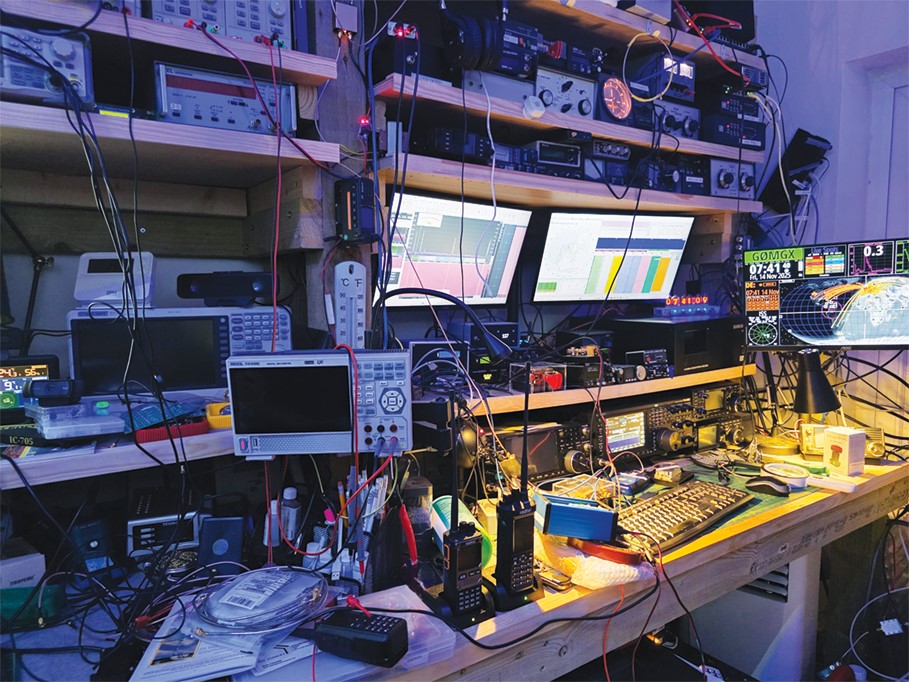
As part of the RSGB’s strategic activities, we are beginning to expand the technical baseline that the Society covers. This isn’t in any way intended to devalue or reduce the focus on traditional radio activities; far from it. We do, however, need to appeal to the modern radio amateur – and probably also figure out what exactly that is!
This may be through: outreach activities where we demonstrate technology to non-licensed individuals with a view to bringing them into the hobby; the maker community where we are hoping to highlight how an amateur radio licence will be an asset to their existing experimentation; and promoting existing and long-standing parts of our hobby to individuals who may not have tried certain aspects. There remains something for everyone in this widely diverse technical hobby that we call amateur radio.
Enjoying the variety within amateur radio
I have been lucky enough in my amateur radio career to try many aspects of the hobby. Currently I am enjoying CW on QO-100 (where the microwave TX/RX frequencies are 13cm and 3cm). All equipment is homebrewed to a greater or lesser extent and I find it great fun. I have also recently ‘graduated’ from the CW Academy scheme and been honoured with Nomination and Sponsorship into CWOps. It took a huge amount of effort on my part but is enormously rewarding and something that I am extremely proud of achieving.
I also still find HF very exhilarating, especially in our current solar cycle position with excellent propagation available frequently. A QRP CW contact the other morning with ZL3 on 30m was enough to get me jumping round the room with delight. That contact was as exciting to me as my first ever QSO – how is it possible for my puny CW signal to make it all the way to New Zealand with a 559 report? So exciting!
I’ve also recently been receiving DATV signals from QO-100 using the excellent BATC receiver the Pico Tuner, and also trying with just a raw SDR Play combined with Simon Brown’s new excellent software ‘SDR Television’. This is also great fun and utilising modern PC technology to do all the digital television decoding without external hardware – fantastic!
The recent articles and online presentations available about polar modulation from QRP Labs and FlexRadio also fascinate me – superb use of software technologies and microcontroller capabilities in our hobby – groundbreaking! There was also a great interview filmed at the RSGB 2025 Convention in which Board Chair Stewart Bryant, G3YSX talked with Hans Summers, G0UPL and Mike Walker, VA3MW about how this exciting technology of polar modulation is being applied within amateur radio.
What is my point?
My point is that it’s never been a better time to be a radio amateur, especially if you have interests in lots of diverse technologies and are willing to learn.
As an example, in my lifetime technology has moved so fast, making very advanced technical spec equipment well within our reach. The availability of the NanoVNA and TinySA (to name just two) have put previously advanced technology into our hands at very low cost. As a radio amateur interested in home construction, there has never been a better time! It does seem, however, that home construction is on the decline, and the dealers I talk to tell me the newly licenced radio amateur wants to purchase a black box, plug it in and get on the air.
The hobby does remain extremely diverse and there are many aspects an individual can turn their hands to, but it seems to me that the overall level of detailed technical knowledge in our community is on the decline. There are still those who dabble as I do, but I wonder what the picture will be like in the future. I hope that the RSGB can go some way in helping to reverse this trend and encourage people to try different things.
We continue to find that ‘people doing practical things is the key to engagement’. Having run three different practical workshops at this year’s RSGB Convention, all with excellent feedback, we continue to find that people enjoy doing practical things and learning by getting their hands dirty. I was extremely pleased with the feedback from the Antenna Workshop where we discussed transmission lines, SWR and some other theory before building a balun and EFHW for portable operations.
Experimenters’ Corner
Hopefully you will have seen my new regular column “Experimenters’ Corner” in RadCom where I hope to introduce new things that members might not have tried for themselves. There will be ideas presented that can create individual or club projects and compare results in a semi-competitive way. The column is planned to cover diverse technical topics, software, experimental antennas and even 3D printing. It also links in with the new web section that is being developed on the RSGB website called ‘Emerging Technologies’. In this section we’re starting to create a hub of information about technologies that are being used in new and exciting ways within amateur radio.
In the November Experimenters’ Column I introduced a simple project to try LoRa modulation, and in December presented a software-based TX and RX pair – the fascination for me of this project was that using an SDR to monitor the transmissions, you can actually see the ‘chirp’ modulation and how it is constructed. Fabulous technical developments at our fingertips and literally in front of our eyes.
I hope that as the RSGB strategic direction continues to develop, we can inspire and provide opportunities for members to learn and get all that they want from this amazing hobby of ours. If they are happy doing what they have always done, then that’s fine too, but the RSGB needs to embrace the concept of the modern radio amateur and nurture ideas and technology for the benefit of all, and most importantly for the longevity of the hobby.
Mark Jones, G0MGX
RSGB Board Director
strategy@rsgb.org.uk
-
You can also find this update in the January 2026 edition of RadCom
Category: RSGB Notices, RSGB Strategic Priorities